Introduction
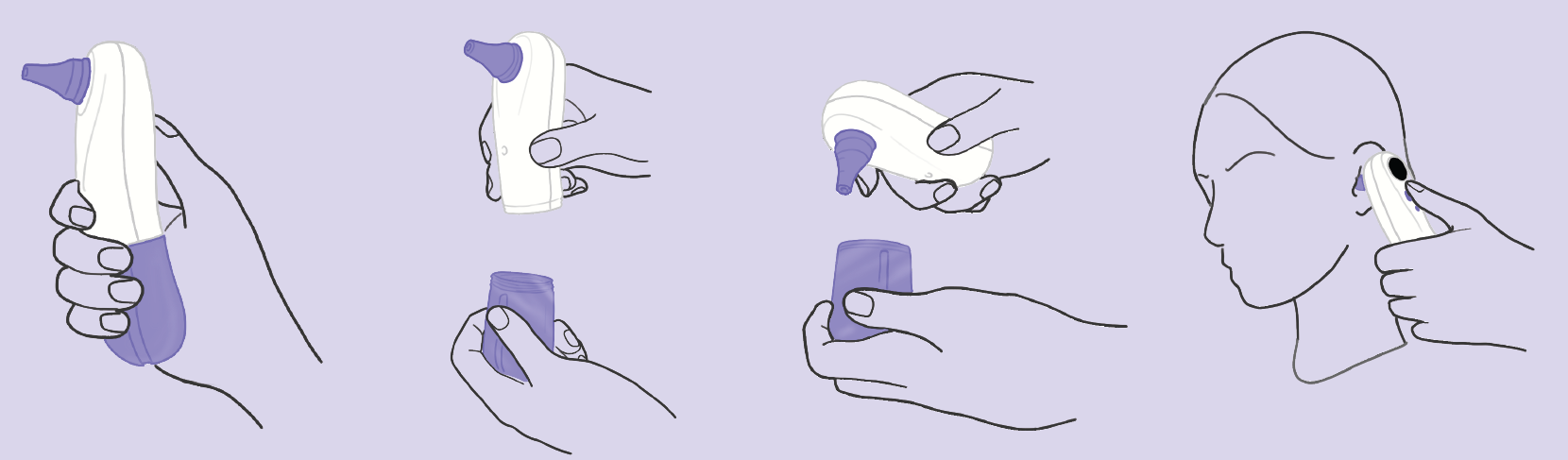
In the second project of the Fall 2024 semester, our fourth-year industrial design students took on a short but high-intensity challenge: designing an infrared ear thermometer for hospital use. This four-week, individual project emphasized speed, iteration, and production-ready detailing, all within the framework of an agile, sprint-based design process.
Project Context & Learning Goals
Framed around agile methodology, students worked through weekly sprints, refining their ideas with each cycle. The aim was to simulate real-world development conditions—rapid prototyping, iterative feedback, and a clear focus on manufacturability. The project pushed students to deliver a realistic, ergonomic, and hygienic thermometer suited for professional healthcare settings.
Key learning objectives included:
- Designing for ergonomics and ease of use in hospital workflows
- Developing interface and display elements for clear temperature readouts
- Addressing hygiene, storage, and maintenance through thoughtful detailing
- Incorporating accessories or disposables like probe covers
- Creating a visually refined, production-feasible design from the first sprint
Teaching Approach & Process
Each week began with a sprint review, where students received feedback on their progress and adjusted their designs accordingly. From early concept sketches to final prototypes, the process emphasized fast decision-making and the ability to iterate based on critique. The final deliverables included a realistic prototype and a presentation for jury evaluation, showcasing both the form and function of their design.
Looking Ahead
This project demonstrated how tight timelines and specific constraints can fuel creativity and clarity in design. The simplicity of the product type allowed students to focus deeply on ergonomics, context, and user interaction, resulting in well-thought-out solutions that responded to real hospital needs.
As a compact, high-focus exercise, the thermometer project offered students valuable experience in rapid concept development and detailed refinement. It reinforced the importance of working decisively while staying open to continuous improvement—skills that are essential in fast-paced professional environments.