Introduction
For the first project of the Fall 2024 semester, we collaborated with TOBB ETÜ Hospital to challenge our third-year industrial design students with a real-world healthcare design problem. Over 12 weeks, students observed various hospital systems, identified areas for improvement, and developed innovative, user-centered product solutions.
This project aimed to blend physical and digital design while fostering a systems thinking approach to problem-solving. The final designs were presented in a hospital exhibition, providing a unique opportunity for students to showcase their work in a professional healthcare setting.
Project Context & Learning Goals
The primary objective of this project was to design impactful, user-centered solutions for hospital environments. Unlike conventional product-focused design tasks, this project required students to:
- Conduct on-site observations to understand the hospital environment firsthand.
- Identify systemic issues and frame problem definitions based on real user needs.
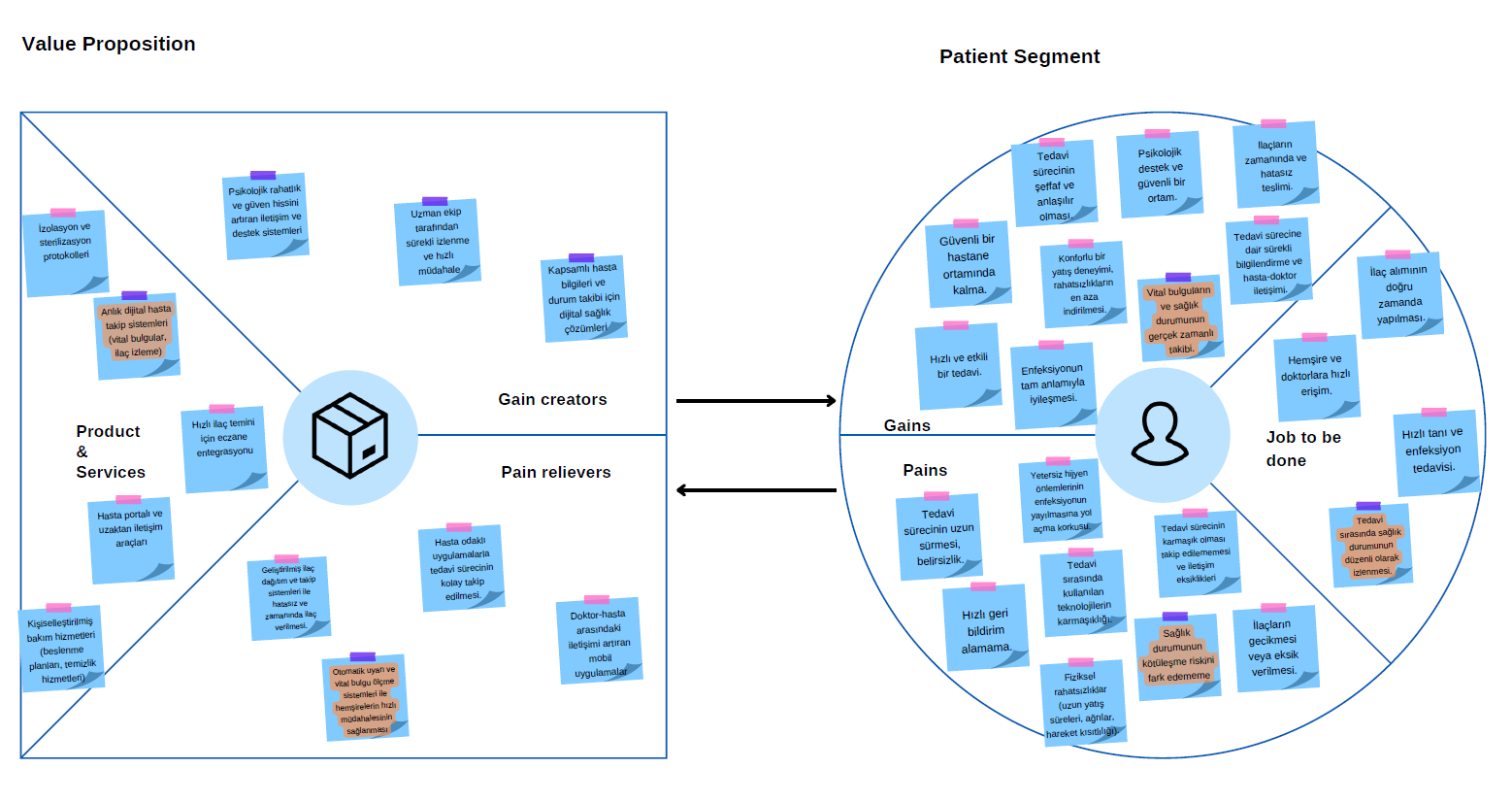
- Apply user-centered and service design methodologies such as:
- Service Blueprinting – Mapping out hospital processes to identify inefficiencies.
- Journey Mapping – Understanding user touchpoints and pain points.
- Empathy Mapping – Defining user needs through qualitative insights.
- User Testing – Validating solutions through feedback and iterative improvements.
- Design physical and/or digital product solutions that enhance the hospital experience.
- Prototype and refine their designs, ensuring feasibility and usability.
This project encouraged students to think beyond standalone products, considering the broader hospital ecosystem and how their designs integrate within it.
Teaching Approach & Process
The project was structured into several key activities:
Hospital Observations
Students conducted field research at TOBB ETÜ Hospital, observing workflows, interactions, and pain points within the hospital environment. They were required to:
- Respect patient privacy and ethical guidelines.
- Seek permission before taking any photos or videos.
- Delete any media if requested by hospital staff.
Seminars & Q&A Sessions
Throughout the project, hospital representatives and faculty members provided seminars on healthcare design challenges. These sessions helped students build a deep contextual understanding before diving into ideation. Additionally, Q&A sessions allowed direct engagement with hospital staff, clarifying practical concerns.
Design & Iteration Process
Students worked in teams of three to develop solutions collaboratively. Each group refined its design through:
- Concept Ideation – Generating multiple ideas based on observed challenges.
- Research & Analysis – Using service design methods to validate design directions.
- Prototype Development – Creating 1:1 scale models to test functionality.
- Critiques & Jury Reviews – Iterating based on instructor and peer feedback.
Evaluation Criteria
The assessment focused on:
- Problem Definition & Analysis – The depth of research and accuracy of problem identification.
- Use of Design Methodologies – Effective application of service design tools.
- Creativity & Feasibility – Innovation balanced with real-world applicability.
- Prototype Quality – The level of detail, craftsmanship, and usability in the final prototype.
- Group Collaboration – Effective teamwork, conflict resolution, and fair work distribution.
Grading was distributed as follows:
- Weekly Deliverables – 40%
- Interim Jury Review – 20%
- Final Jury Evaluation – 30%
- Studio Participation & Engagement – 10%
Key Points & Reflections
Observational Research as a Learning Tool
One of the most valuable aspects of this project was the hands-on exposure to real-world healthcare challenges. By directly engaging with hospital staff and systems, students developed a deeper understanding of user needs, which sharpened their problem-framing skills.
Service Design for Industrial Designers
Many industrial design students are accustomed to focusing on physical product solutions. This project broadened their perspective by introducing service design methodologies, allowing them to:
- Think beyond the object and into system-level solutions.
- Consider the entire user experience, not just the end product.
- Develop integrated solutions that blend physical and digital components.
The Challenge of Defining the Right Problem
One of the biggest challenges was helping students shift from designing what they assume is needed to designing what is actually needed. Many initial ideas focused on isolated problems, but through critique sessions, students refined their problem definitions to target broader systemic issues.
The Impact of a Real Exhibition
Presenting their work to hospital professionals provided an authentic industry-level experience for students. Unlike traditional classroom projects, this real-world exposure gave students valuable feedback from stakeholders who could potentially implement their designs.
Looking Ahead
This project reinforced the importance of user-centered, research-driven design in healthcare. Moving forward, we aim to:
- Expand interdisciplinary collaborations, potentially integrating medical and engineering students.
- Encourage more digital integration, such as UX/UI components for hospital interfaces.
- Improve prototyping opportunities, giving students access to more advanced fabrication methods.
As healthcare continues to evolve, industrial designers have a crucial role in improving patient and staff experiences. We look forward to seeing how future iterations of this project push the boundaries of design-driven healthcare innovation.
If you're an educator, designer, or healthcare professional interested in discussing healthcare design education, I’d love to connect! Feel free to reach out via my website or LinkedIn.